Welcome to our curated guide on bluecapital indonesia — the definitive resource for premium options across Indonesia.
Blue Capital Indonesia: Pioneering Marine Finance and Sustainable Tourism in the Coral Triangle
Indonesia, an archipelago of unparalleled marine wealth, stands at the nexus of ecological significance and economic opportunity. For discerning investors, this presents a unique frontier for generating substantial returns while fostering profound environmental and social impact. Blue Capital Indonesia serves as the definitive guide, structuring and advising on investments within the nation’s burgeoning blue economy, from marine protected area financing to the development of high-integrity blue carbon assets.
The Indonesian Archipelago: A Blue Capital Frontier
Stretching across more than 17,000 islands, the Republic of Indonesia is the world’s largest archipelagic state and the epicentre of marine biodiversity. It is home to the Coral Triangle, an area harbouring 76% of the world’s coral species and more than 37% of its coral reef fish species. This immense natural endowment is the foundation of a blue economy valued in the hundreds of billions of dollars, encompassing sustainable fisheries, world-class marine tourism, and emerging sectors like marine biotechnology.
Yet, this extraordinary asset base faces considerable pressure. The impacts of climate change, unsustainable fishing practices, and coastal development threaten the very ecosystems that underpin this prosperity. This confluence of immense potential and pressing risk creates a compelling thesis for a new class of investment—one that is regenerative by design. The opportunity lies not in extraction, but in restoration, conservation, and the sustainable monetisation of intact, healthy marine ecosystems. For institutional capital, family offices, and ESG-focused corporations, Indonesia is not merely a destination; it is the pre-eminent blue capital frontier of the 21st century.
From the bustling financial district of Jakarta, where policy and capital converge, to the remote, vibrant reefs of Raja Ampat, the landscape for investment is as diverse as the archipelago itself. Navigating this requires more than financial acumen; it demands deep, localised ecological and cultural understanding. This is the specialised domain where Blue Capital Indonesia provides critical insight and execution capability.
Our Mission: Blending Profit with Purpose in Indonesia’s Ocean Economy
The core mission of Blue Capital Indonesia is to catalyse private capital for the conservation and sustainable development of Indonesia’s marine resources. We operate on the fundamental belief that long-term economic prosperity is intrinsically linked to ecological health. Our work moves beyond traditional philanthropy or simple ESG screening, focusing instead on building robust, scalable business models where positive environmental and social outcomes are direct drivers of financial performance.
We facilitate a paradigm shift from a resource-depletion model to a regenerative one. This involves structuring investments that actively enhance marine biodiversity, sequester carbon, and create sustainable livelihoods for coastal communities. By aligning with global frameworks such as the UN Sustainable Development Goals (particularly SDG 14: Life Below Water) and the growing demand for credible, nature-based solutions, we connect sophisticated international capital with high-impact projects on the ground.
Our purpose is to serve as the essential bridge. We translate the complex needs of marine conservation projects in places like the Komodo National Park into the language of institutional finance, complete with rigorous risk analysis, clear impact metrics, and pathways to viable returns. We believe that the future of Indonesia’s ocean economy will be defined by those who invest in its resilience.
Core Services: Navigating Investment in Indonesia’s Marine Sector
Blue Capital Indonesia offers a specialised suite of advisory and structuring services designed to de-risk and unlock opportunities within the nation’s blue economy. Our approach is hands-on, research-driven, and grounded in decades of combined experience in Indonesian finance, conservation, and project development.
Marine Protected Area (MPA) Financing
Indonesia has committed to protecting 30% of its marine territory by 2030. Achieving this ambitious goal requires innovative and sustainable financing mechanisms that go beyond government budgets. We specialise in developing financial models for MPAs, creating revenue streams from sources such as conservation-linked tourism fees, blue carbon credits, and biodiversity offsets. We structure blended finance vehicles that combine philanthropic capital with private investment to ensure the long-term operational and financial sustainability of critical marine habitats from the Sunda Banda Seascape to the Lesser Sundas.
Sustainable Tourism Advisory
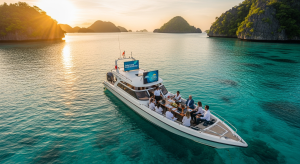
The archipelago’s potential for high-value, low-impact tourism is immense. We advise investors, developers, and operators on creating ecologically sensitive and commercially successful tourism assets. This includes due diligence for luxury eco-resort acquisitions in Bali’s quieter northern coast, developing business plans for conservation-focused liveaboard fleets in Komodo, and ensuring new developments in Raja Ampat adhere to the highest global standards of sustainability. Our advisory work ensures that tourism becomes a net positive force for conservation and local communities.
Blue Carbon & Reef Restoration Credits
The market for nature-based carbon credits is evolving rapidly, and blue carbon ecosystems (mangroves, seagrasses, and coral reefs) are among the most effective carbon sinks on the planet. We are at the forefront of developing investment-grade blue carbon projects in Indonesia. Our services include identifying and securing project sites, conducting feasibility studies, and structuring projects to generate high-integrity, verifiable carbon and biodiversity credits. We focus particularly on pioneering coral reef restoration projects that offer measurable carbon sequestration and significant co-benefits for biodiversity and coastal resilience.
Project Due Diligence & ESG Vetting
For capital allocators, navigating the local operational landscape is the greatest challenge. Our most critical service is our rigorous, multi-stage vetting process. Every project we represent undergoes exhaustive due diligence, covering financial viability, legal and regulatory compliance, operational capacity, and, most importantly, environmental and social integrity. We provide our partners with the verified, transparent data they need to make informed investment decisions, ensuring that every dollar deployed achieves its intended financial and impact objectives.
Project Spotlight: From Komodo to Raja Ampat
Theory is one thing; execution is another. Our value is demonstrated through tangible projects that deliver measurable results. While respecting client confidentiality, we can highlight the archetypes of initiatives that Blue Capital Indonesia champions.
Komodo National Park: A Model for Sustainable Ecotourism
In the waters surrounding Komodo, we have advised on structuring financing for community-led enterprises that support the park’s conservation goals. This includes initiatives to fund dedicated ranger patrols through a premium tourism levy and developing a network of environmentally friendly mooring buoys to protect fragile coral reefs from anchor damage. By channelling tourism revenue directly back into conservation management, we help create a self-sustaining loop where the park’s natural assets are both the attraction and the primary beneficiary of the economic activity they generate.
Raja Ampat: The Epicentre of Marine Biodiversity
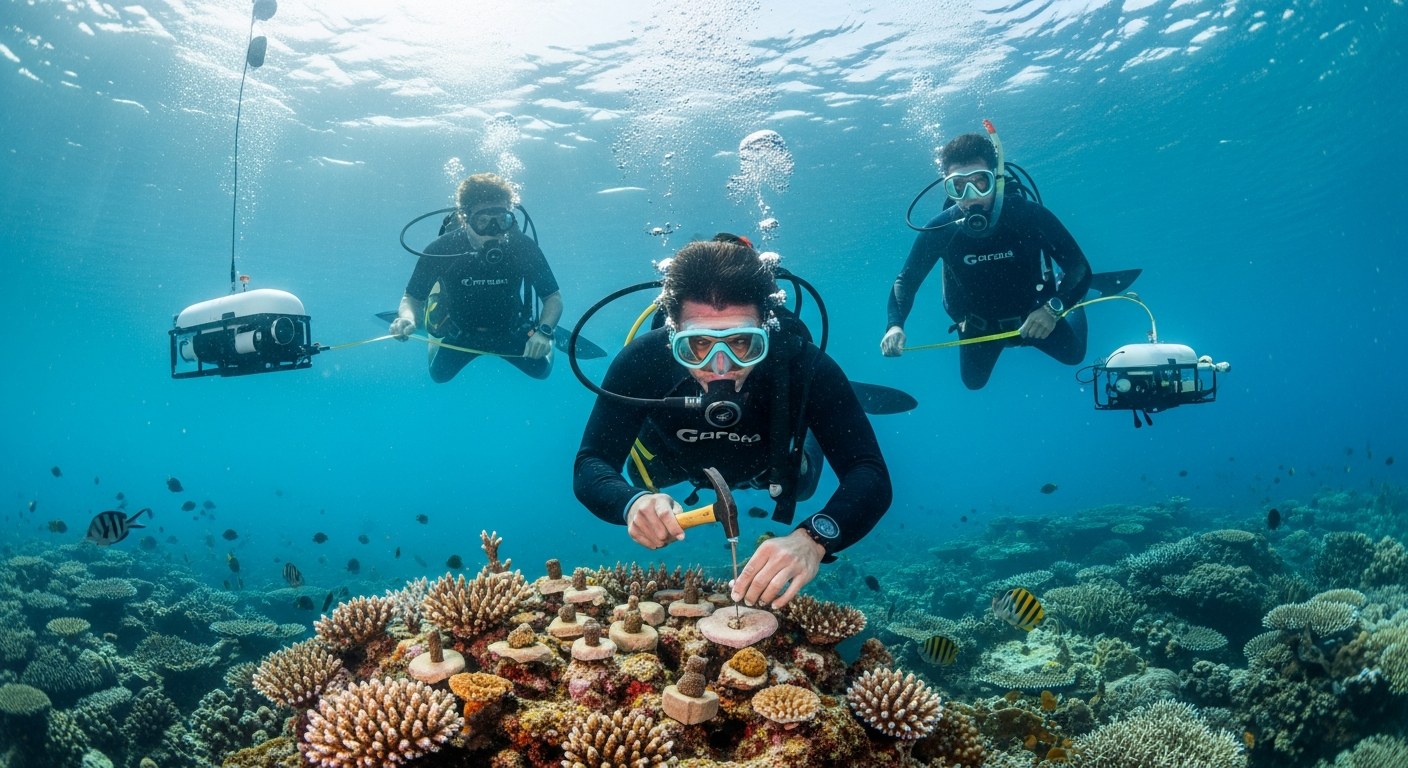
In the Bird’s Head Seascape, widely considered the global epicentre of marine life, our focus is on large-scale reef restoration. We work with technical partners to identify degraded reef sites and structure projects that use cutting-edge techniques like micro-fragmentation to accelerate coral growth. The investment model is built around the future sale of verified biodiversity and carbon credits to corporations seeking to meet their net-zero and nature-positive commitments. This transforms reef restoration from a purely philanthropic pursuit into a scalable, investable asset class.
The Alor-Pantar Strait: Community-Centric Conservation
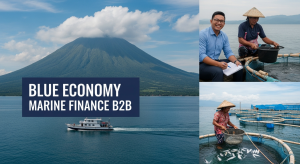
Beyond the well-known destinations, we identify opportunities in emerging locations like the Alor archipelago. Here, we facilitate partnerships between impact investors and local communities to establish sustainable seaweed and pearl farming operations. These businesses provide alternative livelihoods that reduce pressure on reef fisheries. The investment is structured to include profit-sharing and technical assistance, ensuring that local stakeholders are empowered as long-term stewards of their marine environment, a modern embodiment of the Indonesian principle of gotong royong, or mutual cooperation.
The Future of Blue Carbon: Reef Restoration and ESG Impact
As corporate and national entities intensify their search for credible pathways to net-zero, the demand for high-quality carbon credits is set to expand exponentially. Blue carbon—the carbon captured and stored by marine and coastal ecosystems—represents one of the most compelling nature-based solutions. While mangroves and seagrass meadows are well-established sources of blue carbon credits, Blue Capital Indonesia is pioneering the next frontier: carbon sequestration through coral reef restoration.
Healthy reef ecosystems are not just bastions of biodiversity; they are dynamic systems that facilitate significant carbon cycling through calcification and photosynthesis. By financing projects that actively restore and expand these reefs, we are creating a novel, high-integrity asset class. These are not just “avoided emissions” projects; they are active carbon removal and storage initiatives with a wealth of verifiable co-benefits.
Each blue carbon credit generated from a reef restoration project we advise on represents more than a tonne of CO2e. It also represents enhanced habitat for thousands of marine species, improved coastal protection for vulnerable communities, and a direct contribution to the resilience of local tourism and fishing economies. For ESG teams and impact investors, this provides a powerful, multi-faceted narrative and a quantifiable impact that goes far beyond a simple carbon offset.
Why Partner with Blue Capital Indonesia?
In a market as complex and nuanced as Indonesia, your choice of partner is paramount. Blue Capital Indonesia offers a distinct combination of capabilities that positions our clients for success.
Unrivalled Local Expertise
Our team possesses a rare blend of international financial expertise and deep, on-the-ground Indonesian experience. We are not remote analysts; we are based here, with an intricate understanding of the regulatory environment, cultural dynamics, and the practical realities of project implementation in remote archipelagic settings. We navigate the complexities so our partners can focus on the strategic opportunity.
A Curated, Vetted Portfolio
We do not present a catalogue of unverified ideas. We offer a highly curated portfolio of investment-ready projects that have survived our rigorous due diligence gauntlet. Our editorial standard for project selection is uncompromising, ensuring that every opportunity we endorse is built on a foundation of integrity, viability, and genuine impact potential. This disciplined approach mitigates risk and maximises the probability of achieving both financial and non-financial objectives.
Bridging Global Capital and Local Impact
We are fluent in the languages of both Wall Street and a West Papuan village. We understand the need for clear financial projections, robust ESG reporting, and defined exit strategies. We also understand the critical importance of community consent, customary land rights, and equitable benefit sharing. Blue Capital Indonesia acts as the trusted interpreter and facilitator, ensuring seamless alignment between the expectations of global capital and the needs of local reality.
Frequently Asked Questions
What is the typical investment size for projects you advise on?
Our projects range in scale. Early-stage conservation-tech or community enterprise initiatives may begin in the US$250,000 to US$1 million range. Larger infrastructure projects, such as the development of a sustainable resort or large-scale MPA financing, typically require capital from US$5 million to US$50 million. We work with our partners to structure deals appropriate for their specific mandates, from seed-stage impact funding to institutional-level project finance.
How does Blue Capital Indonesia generate revenue?
We operate on a transparent advisory and success-fee model. Our revenue is generated through retainers for due diligence and strategic advisory services, and success fees tied to the successful closing of financing for the projects we represent. This model ensures our interests are fully aligned with those of our clients and the projects we champion—we succeed only when high-integrity investments are successfully deployed.
What are the primary risks associated with investing in Indonesia’s blue economy?
The primary risks include regulatory uncertainty, operational challenges in remote locations, and ecological risks tied to climate change. Our core function is to mitigate these risks through rigorous due diligence, strong local partnerships, structuring projects with adaptive management plans, and maintaining a constant dialogue with key government and community stakeholders. We provide our clients with a clear-eyed view of the risk landscape and the strategies to navigate it.
How do you measure and report on impact?
We insist on robust monitoring, reporting, and verification (MRV) for all projects. For carbon projects, this means adherence to established international standards like Verra or Gold Standard. For biodiversity and social impact, we use a combination of scientific field monitoring (e.g., reef health surveys) and community-based reporting to track key performance indicators, which are shared with investors in detailed quarterly or annual impact reports.
What is a “blue carbon credit” and is it a regulated asset?
A blue carbon credit represents one metric tonne of carbon dioxide equivalent sequestered or stored by a marine ecosystem. While the market is largely voluntary, it is rapidly maturing with increasingly rigorous standards for verification. We focus on projects that can be certified under leading global standards, ensuring the credits are of high integrity and can be credibly used by corporations for their climate commitments.
How do you ensure local communities benefit from these investments?
Free, Prior, and Informed Consent (FPIC) is the bedrock of our approach. We only work with projects that have demonstrable and equitable benefit-sharing mechanisms. This can take the form of direct employment, equity ownership in community enterprises, funding for social infrastructure like schools and clinics, or royalty payments from tourism or carbon credit revenues. Ensuring genuine community partnership is essential for long-term project success and ethical integrity.
What are the potential financial returns on these types of investments?
Returns vary significantly based on the project type and risk profile. Concessionary or blended-finance deals may target capital preservation and modest single-digit returns. Commercial ventures in sustainable tourism or market-rate carbon projects can target internal rates of return (IRR) in the mid-teens or higher. We provide detailed financial models for each opportunity, allowing investors to assess the risk-return spectrum clearly.
Is the Indonesian political and regulatory environment stable for foreign investment?
Indonesia has made significant strides in improving its investment climate, particularly with the Omnibus Law on Job Creation aimed at streamlining regulations. The government is vocally supportive of sustainable development and “blue economy” initiatives. While navigating bureaucracy remains a key challenge, our deep local network and understanding of the legal framework help to effectively manage this political and administrative risk for our partners.
What makes a coral reef restoration project “investment-grade”?
An investment-grade reef project must have a clear scientific methodology with a high probability of success, a robust MRV plan to quantify outcomes (coral cover, biomass, carbon sequestration), a secure long-term tenure over the project site, and a viable path to monetisation, typically through the sale of verified carbon or biodiversity credits to committed offtakers. Our vetting ensures all these components are in place.
How long is the typical investment horizon?
For nature-based solutions, patience is key. The investment horizon is typically medium to long-term. Projects involving natural ecosystem restoration, such as for carbon credits, often require a 5- to 10-year timeframe to mature and begin generating significant returns. Sustainable tourism infrastructure projects may have a similar or slightly shorter horizon. We work with investors whose capital is aligned with these patient timelines.
Begin a Conversation
The opportunity to invest in the resilience and prosperity of Indonesia’s marine ecosystems is immense. For family offices, funds, and corporations ready to deploy capital into this critical sector, a detailed and confidential discussion is the next step. Contact our business development team to explore how Blue Capital Indonesia can serve as your strategic partner in this vital frontier.
Please direct initial enquiries to bd@juaraholding.com or message our team via WhatsApp at +62 811-3941-4563.